Agentic AI
How to Implement Agentic AI for Business Growth
By Samy Nakach · · Updated September 2, 2026
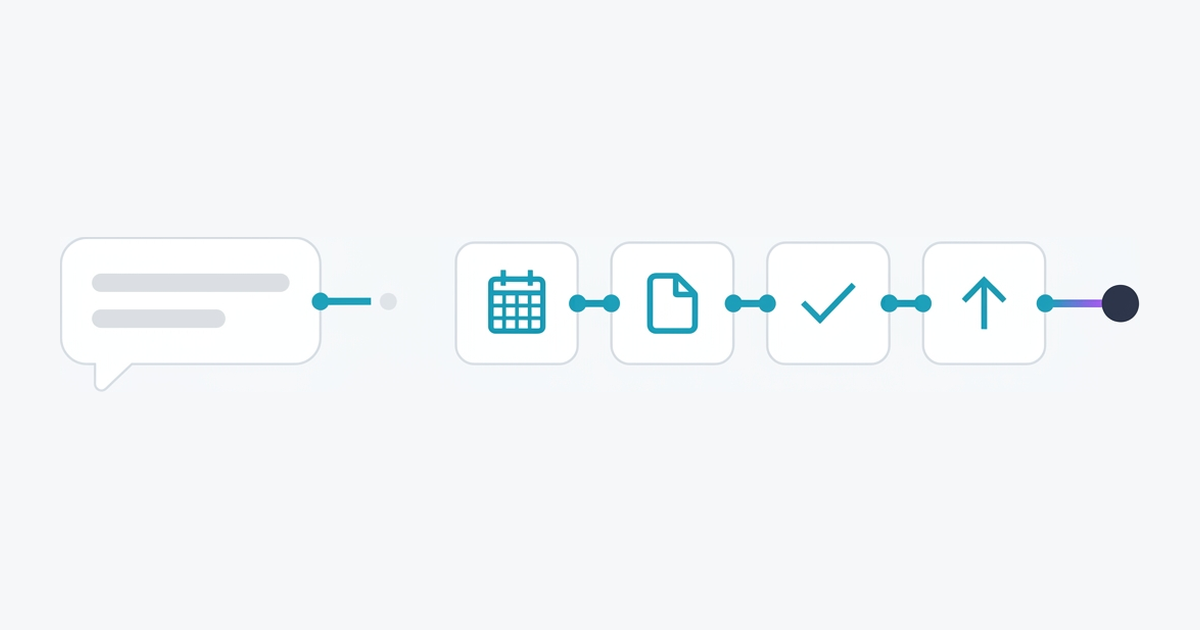
The practical SMB playbook for moving from simple chatbots to autonomous agents, so you can scale operations, response time, and revenue without scaling headcount.
TL;DR
Agentic AI is the shift from AI that answers to AI that acts. Instead of a chatbot that replies to one message, an agent plans, uses your tools, and finishes the job: qualifying a lead, booking the appointment, updating the CRM, sending the follow-up. For SMBs, the ROI shows up as faster response time, fewer no-shows, more booked revenue per employee, and the ability to grow output without growing headcount.
What is agentic AI?
Agentic AI describes autonomous systems built on large language models that can make decisions, call external tools, and chain multiple steps together to complete a goal. A chatbot finishes its job when it sends a reply. An agent finishes its job when the outcome is done: the meeting is on the calendar, the invoice is sent, the lead is in the pipeline with notes attached.
In practice, an agent has three things a chatbot doesn't: a goal, a set of tools (CRM, WhatsApp, calendar, payments, internal databases), and the ability to plan the next action based on what just happened.
Why agentic AI matters for business growth
Most SMBs hit the same wall: more leads, more clients, more messages, but the same team. Hiring is slow and expensive, and the bottleneck is rarely the work itself. It's the coordination around the work: replying to inquiries within minutes, qualifying leads before they go cold, confirming appointments, chasing no-shows, keeping the CRM clean.
Agentic AI compresses that coordination layer. One well-scoped agent can absorb the work of a part-time coordinator, run 24/7, never forget a follow-up, and stay perfectly consistent. The growth lever isn't "AI does everything." It's "your team spends 100% of their time on the work that actually requires them."
Chatbot vs. agent: where the ROI actually comes from
| Dimension | Traditional chatbot | AI agent |
|---|---|---|
| Output | A reply | A completed task |
| Memory | Single turn | Contextual across the journey |
| Tools | None or one | CRM, calendar, WhatsApp, payments |
| Failure mode | "I didn't understand that" | Escalates to a human with full context |
| Business impact | Deflects FAQs | Books revenue, reclaims hours |
A 6-step roadmap to implement agentic AI
1. Pick one painful, repetitive workflow
Don't start with "AI for everything." Start with the one workflow that's leaking the most money this month, usually lead response, appointment booking, or post-sale follow-up. The narrower the scope, the faster the agent gets to production and the cleaner the ROI story.
2. Map the human version first
Before writing a prompt, write the standard operating procedure a new hire would follow. What information is needed at each step? What systems do they open? When do they escalate? Agents inherit the structure you give them; vague processes produce vague agents.
3. Connect the tools, not just the model
The model is the easy part. The leverage is in the integrations: WhatsApp, your CRM, your calendar, your payment processor, your internal database. An agent without tools is a chatbot. An agent with three well-chosen tools can run an entire intake-to-booking funnel.
4. Define guardrails and escalation paths
Decide explicitly what the agent cannot do without a human: refunds, schedule changes outside business hours, clinical advice, contract terms. Every agent should know when to stop and hand off with a full summary of the conversation so far.
5. Ship narrow, then expand
Launch the first agent against a slice of traffic: one channel, one client segment, one shift. Watch real conversations for two weeks. Patch the gaps. Then expand scope. Trying to launch an "all-purpose" agent is the single most common reason these projects fail.
6. Measure outcomes, not interactions
Track booked appointments, qualified leads, resolution rate, response time, no-show rate, and hours returned to the team. "Messages handled" is a vanity metric. Booked revenue per employee is the one that matters.
How to measure ROI
- Time to first response (target: under 2 minutes, 24/7)
- Lead-to-booking conversion rate before and after launch
- No-show rate after automated reminders and rescheduling
- Hours per week reclaimed from coordination tasks
- Revenue per employee, tracked monthly
- Cost per qualified lead vs. paid acquisition
Common mistakes to avoid
- Treating the agent as a chatbot upgrade instead of a workflow rebuild.
- Skipping the SOP step and prompting from memory.
- Launching against 100% of traffic on day one.
- No escalation path, so edge cases become customer-experience disasters.
- Measuring "messages handled" instead of business outcomes.
FAQ
What is agentic AI in simple terms?
Software that can plan, use your tools, and finish a real task, not just reply.
Is agentic AI safe for customer-facing work?
Yes, when you scope the agent narrowly, give it explicit guardrails, and define a clear escalation path to a human.
How long does the first agent take to ship?
A focused agent (lead qualification, booking, follow-up) typically goes live in 2 to 6 weeks.
Do I need a big tech team?
No. Most SMBs deploy their first agent with an external partner handling the build and integrations.
Ready to ship your first AI agent?
HeyFlou helps SMBs design, build, and operate agentic AI systems, from the first scoped workflow to the infrastructure that runs your operations. Explore AI agents or book a strategy call.
About the author
Samy Nakach: Co-founder and CEO of HeyFlou. Works with SMB teams on AI automation across finance, operations, customer service and marketing.