Customer service
AI for Customer Service: What SMBs Can Automate
By Samy Nakach ·
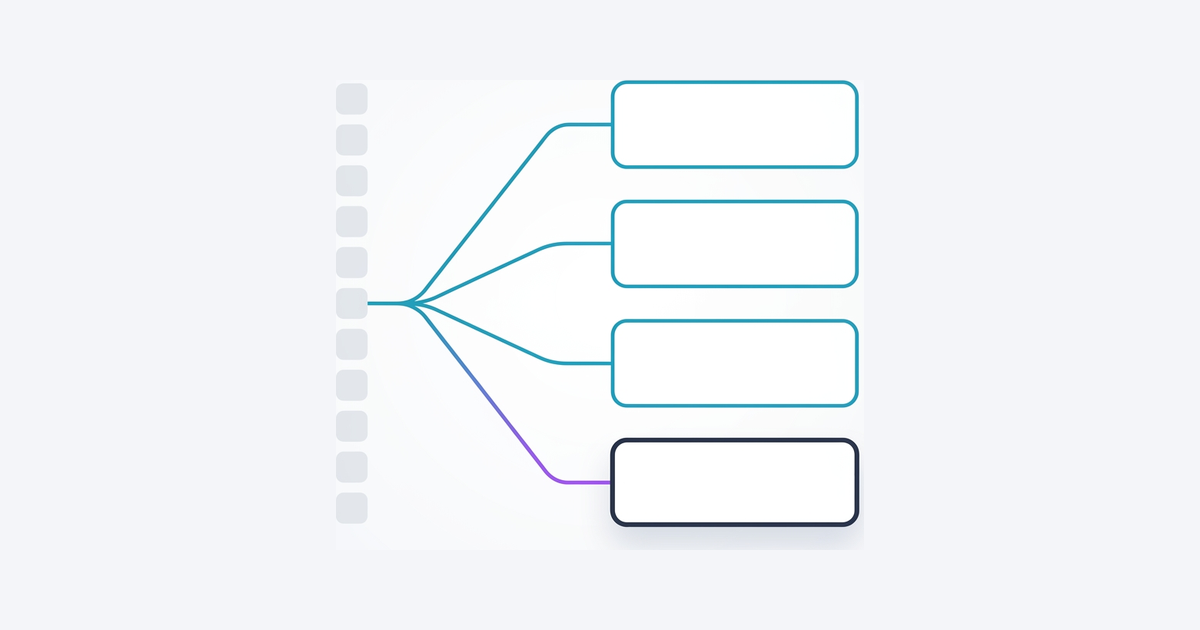
Automate the repeat questions and the scheduling. Route anything involving money, apologies or exceptions to a person, fast.
TL;DR
In an SMB, most inbound messages are a small number of questions asked repeatedly, plus booking and rescheduling. That portion automates well and is where the return is. What does not automate well is anything where the customer is upset, the answer costs money, or the situation is an exception to your own policy. The design problem is not the AI — it is where you place the handoff, and how quickly a person can take over.
Sort your inbox before you buy anything
Before choosing a tool, read one week of inbound messages and put each into one of four buckets:
- Repeat questions. Hours, location, price, availability, do you do X, how long does Y take.
- Transactions. Book, reschedule, cancel, confirm, where is my order.
- Judgement. Complaints, refunds, exceptions, anything where the right answer depends on context you have not written down.
- Genuinely new. Things you have never been asked before.
Buckets 1 and 2 are the automation target. Bucket 3 must reach a human quickly. Bucket 4 is how you learn what to add to bucket 1 next quarter.
Most teams are surprised by the ratio. The messages that dominate memory are bucket 3, because those are the ones that ruined an afternoon. The messages that dominate volume are buckets 1 and 2.
Repeat questions: the easy win, with one condition
Answering the same question consistently, instantly, at 2am, is the thing language models are unambiguously good at. The condition is that the answer must exist somewhere authoritative and current.
This is the part people skip. An agent grounded in a stale price list confidently quotes last year's prices. The failure is not the model — it is that no one owns the source document. Before deploying, decide who updates the answers and how often. If the answer is nobody, the project will decay within a quarter.
A practical shape that works: the agent answers from a maintained document, and when it is not confident, it says so and offers the human. "I'm not certain about that one — let me get someone" is a better outcome than a fluent wrong answer. Customers forgive the first and remember the second.
Transactions: where the real hours are
Booking, rescheduling, reminders and confirmations are high frequency, structured, and tolerate error well. If a reminder goes out twice, nobody's day is ruined.
The gain compounds because these interactions are usually multi-round. A booking is rarely one message — it is a proposed time, a conflict, a counter-proposal, a confirmation. Each round is a context switch for whoever is handling it. Removing the whole exchange is worth considerably more than the sum of the individual message times.
This is also where channel matters more than tooling. In Mexico, customers message on WhatsApp and expect a reply there. An elegant automation living in an email inbox the customer never opens is not an improvement.
Judgement: design the handoff, not the answer
The instinct is to try to automate complaints too, usually with a sentiment classifier and a soothing script. Resist it for the first project.
An upset customer wants two things: to be understood, and for someone with authority to fix it. An agent can do the first badly and the second not at all. What it can do usefully is recognise the situation and get out of the way — gather the relevant details, attach the account history, and hand a person a complete picture rather than a cold start.
That is a real improvement and it is far more achievable than automated de-escalation. The measure is time-to-human, and it should be short and obvious. Every additional round the customer spends trying to escape the bot costs you more than the automation saved.
What we watch after launch
Three signals, in order of how quickly they move:
Time to first response. Changes immediately and is easy to verify. Usually the first thing a customer notices.
Containment, honestly measured. The share of conversations fully resolved without a human — but only counting the ones the customer did not later re-open about the same issue. Containment measured without that correction rewards a bot for stonewalling.
Escape time. How long it takes a customer who wants a human to get one. If this number is drifting up, the automation is trapping people, and the damage will not show up in a dashboard until reviews start mentioning it.
Where this fits
Customer service is usually the right first project, for the reasons in what to automate first: high frequency, consistent inputs, low cost of error. The nuance is that "customer service" is really the four buckets above, and only two of them are the target.
If the volume is arriving through scheduling rather than questions, scheduling and intake automation is the closer fit.
We build these as AI agents — systems that complete the booking and update the record, rather than replying and leaving the work for a person.
About the author
Samy Nakach: Co-founder and CEO of HeyFlou. Works with SMB teams on AI automation across finance, operations, customer service and marketing.