Operations
Scheduling and Intake Automation for Small Teams
By Samy Nakach ·
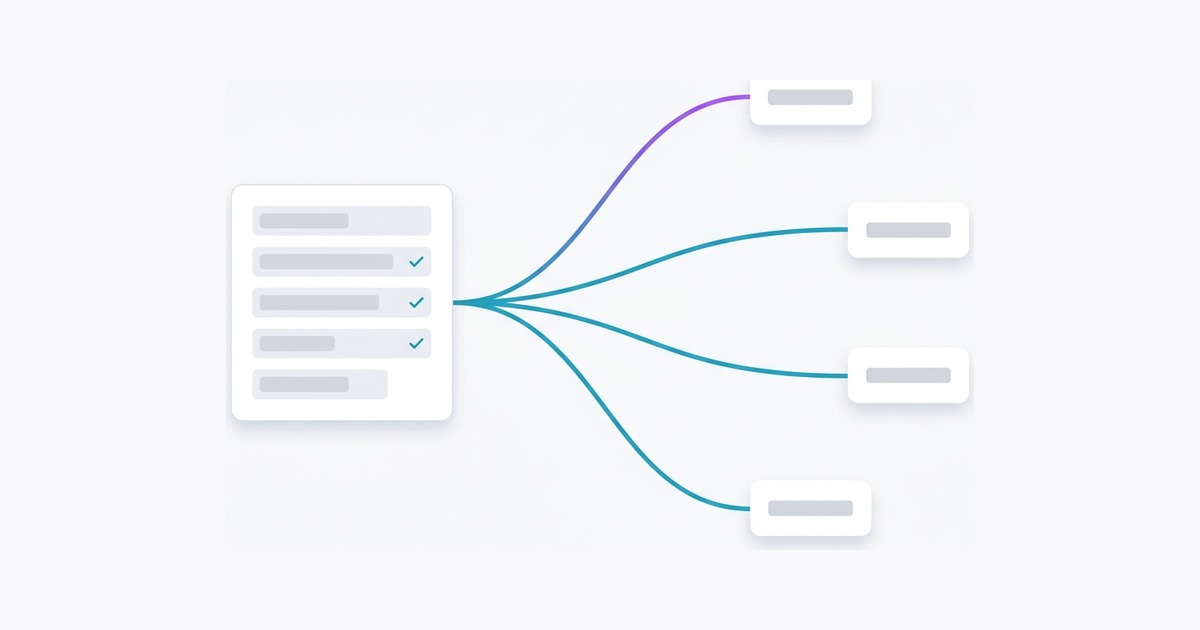
Intake is not a form. It is everything between "yes, I'm interested" and "this person is set up in our systems" — and that gap is where the hours go.
TL;DR
Scheduling automation is well-understood and mostly a tooling decision. Intake is the harder and more valuable problem: collecting the right information once, validating it, and getting it into every system that needs it without a person retyping anything. Most intake projects fail at the same point — nobody had written down what the process actually is, so the automation encodes one person's version of it.
Scheduling is the easy half
Booking, rescheduling, reminders and confirmations are a solved category. Any reasonable tool handles the calendar mechanics. The two things that decide whether it works in practice are channel and conflict rules.
Channel. The booking has to happen where the customer already is. In Mexico that is overwhelmingly WhatsApp. A booking link sent by email to someone who communicates on WhatsApp adds friction rather than removing it.
Conflict rules. Every business has rules it has never articulated: no first appointments on Monday morning, thirty minutes between site visits in different neighbourhoods, this particular client always gets the senior person. These live in somebody's head. If they are not encoded, the automation will book things that a human would have known not to book, and trust evaporates after two or three of those.
Getting the rules out of people's heads is the actual work. The calendar integration is the trivial part.
Intake is where the hours actually are
Intake spans from initial interest to fully set up. In most small businesses that means: collect details across several messages, chase the two things the client forgot, retype it into the CRM, create a folder, maybe a spreadsheet row, send a welcome message, notify whoever is responsible.
Almost none of it requires judgement. Nearly all of it is done by hand, and it is spread thin enough across the week that nobody perceives it as a large cost.
Three parts automate well:
Collection. A conversational intake that asks for what is missing, in the channel the client is already using, beats a long form. Forms have an abandonment problem; conversations do not, because the client can answer in fragments over time.
Validation. Checking a required field is present, a date is plausible, a phone number is well-formed, a tax ID has the right shape. Cheap to implement, and it removes an entire category of downstream cleanup.
Propagation. One record written to every system that needs it. This is the highest return step, because retyping is both slow and the main source of inconsistency between systems.
The failure mode: automating a habit
If nobody can describe intake end to end, it is not a process. It is a habit, and it differs by whoever is doing it that day.
We saw this clearly with a multilingual nonprofit coordinating immigration and settlement processes for families across Spanish, English and Portuguese. Their entire operation ran on spreadsheets, with no shared structure. The valuable work was not building anything clever — it was restructuring the operation into a three-pillar architecture so there was a single agreed process to automate against. Three weeks, three languages, and no custom code, because the platform they already paid for could do it once the structure was right.
Expect the documentation step to surface disagreements. Two people will describe the same process differently and both will be certain. That is not a delay — resolving it is usually worth more than the automation, and it has to happen before any tool can help.
Multilingual intake is a real constraint
If your clients write in more than one language, intake has to handle it at the point of collection, not by translating afterwards. Names, addresses and document types do not survive naive translation, and a record that has been round-tripped through a translator is worse than one captured natively.
For Mexican SMBs serving both local and cross-border clients, this shows up constantly and is almost always underestimated at the start.
What to measure
Time from first contact to fully set up. The number that matters, and the one nobody tracks because the work is spread across people and days.
Fields corrected after the fact. A direct measure of whether validation is working. Should trend toward zero.
Systems out of sync. Pick two systems that should agree and sample them. If they disagree, propagation is broken somewhere, and it is probably a person retyping.
Where this fits
Operations is the function where automation candidates hide, for the reasons in what to automate first — high frequency, low visibility, rarely on anyone's job description.
If most of your inbound volume is questions rather than bookings, AI for customer service is the better starting point.
When intake spans several systems that were never designed to talk to each other, it becomes an infrastructure problem rather than a tooling one.
About the author
Samy Nakach: Co-founder and CEO of HeyFlou. Works with SMB teams on AI automation across finance, operations, customer service and marketing.