Finance
Automating Invoicing and Payment Follow-Up
By Samy Nakach ·
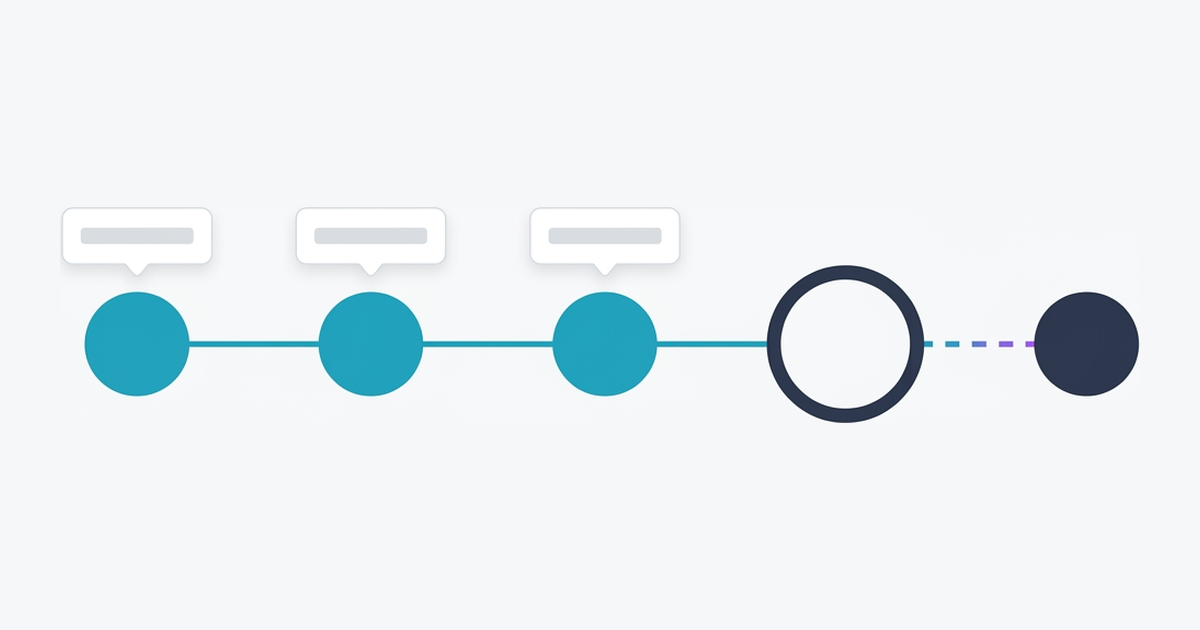
Automate the reminder, never the amount. The chasing is mechanical; the number and the relationship are not.
TL;DR
Late payment in small businesses is usually not a collections problem — it is a follow-up-consistency problem. Invoices go out, the first reminder gets sent, and the second and third do not, because the person responsible is busy and chasing is uncomfortable. Automation fixes the consistency without touching the parts that need judgement. The rule that keeps it safe: automate when a message goes out and what it says; never automate what is owed, and always leave an obvious way for a person to stop the sequence.
Why follow-up decays
Nobody forgets the first reminder. The system breaks at the second and third.
The reasons are human. Chasing feels adversarial, especially with a client you like or depend on. It is easy to defer for a week, and a week becomes a month. Meanwhile the information about who owes what lives in one person's head or a spreadsheet they maintain alone, so nobody else can pick it up.
This is close to an ideal automation candidate on every dimension in what to automate first except one: frequency is high, inputs are consistent, the process is well-documented — but the cost of an error is real. That single exception determines the entire design.
Draw the line at the amount
The distinction that makes this safe is between the schedule and the substance.
The schedule — when a reminder fires, through which channel, in what tone, escalating over time — is mechanical. It should be automated completely, because consistency is exactly what humans are bad at here.
The substance — how much is owed, whether this invoice is disputed, whether this client gets an extension — is judgement. It should never be generated. It should be read from the system of record, and if the system of record is wrong, the fix is upstream.
An automation that chases the wrong amount does more damage than no automation at all. You have not just failed to collect; you have made the client doubt your bookkeeping, and now the conversation is about your competence rather than their payment.
The escalation ladder
A sequence that works in practice, with human checkpoints built in rather than added later:
- Invoice sent. Confirmation that it arrived, in the channel the client actually reads.
- Before due date. A neutral reminder. Not a chase — many late payments are simply forgotten, and this one costs nothing.
- Just after due date. Factual: this is outstanding, here is the amount, here is how to pay. Still automated.
- Fourteen days late. The sequence pauses and flags a person. Something is happening that a template cannot address.
- Beyond that. Entirely human. By this point the question is about the relationship, not the invoice.
Steps 1 to 3 are the bulk of the volume and where the return is. Step 4 is the important design decision: the automation's job is to stop and hand over, not to keep escalating politely into a wall.
Every message must also carry a way for the client to say "wait, there's an issue" that takes them straight to a person. A dispute caught at day three is a conversation. The same dispute discovered at day sixty is a bad debt.
Reconciliation: support, do not decide
Matching payments to invoices is tedious and rule-based, which makes it tempting to automate fully. Match the obvious cases automatically — exact amount, clear reference, right account — and queue everything else for review.
Partial payments, combined payments across several invoices, and payments from an unfamiliar account are exactly where automated matching produces confident, wrong answers. The queue is not a failure of the automation; it is the automation doing its job, which is to remove the ninety percent that is mechanical so a person can spend attention on the ten percent that is not.
Channel matters more than the template
In Mexico, an invoice reminder by email frequently goes unread while the same message on WhatsApp gets a reply the same day. The most carefully written escalation sequence is worth nothing in an inbox the client does not open.
Match the channel to how the client already communicates with you, which is usually how they contacted you in the first place.
What to measure
Days sales outstanding. The headline number, but slow to move — give it a full quarter.
Share of invoices that received every scheduled reminder. This moves within weeks and is the real proxy for whether the automation is working, because consistency was the original problem.
Disputes raised before day fourteen versus after. Rising early disputes is a good sign. It means problems are surfacing while they are still cheap.
Where this fits
Finance has the clearest return of the four functions and the highest cost of error, so it is often the second project rather than the first — after a team has seen how the systems behave on their real data somewhere less expensive.
If invoices are late because the underlying client records are inconsistent, the problem starts earlier: see scheduling and intake automation.
We build payment follow-up as custom automation, because the escalation ladder and the pause points are specific to how each business handles its clients.
About the author
Samy Nakach: Co-founder and CEO of HeyFlou. Works with SMB teams on AI automation across finance, operations, customer service and marketing.